

What Is Scoliosis? Meaning, types, Symptoms, Causes &Treatment
What Is Scoliosis? A Complete Patient Guide
Scoliosis is a spinal disease that causes an unusual curvature. At Bone Care One Day Surgery Centre, we assist patients in comprehending this disorder. Early detection makes it easier to handle and avoid further complications. Here in this guide, we will deep dive into explains this disorder including its symptoms, causes, and options of Scoliosis treatment Abu Dhabi. Our aim is to provide patients with all the necessary assistance.
What Is Scoliosis?
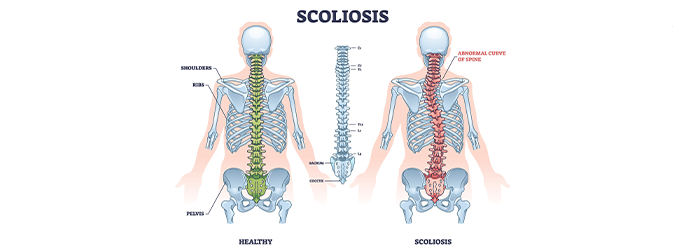
Scoliosis refers to the abnormal sideways curve of the spinal cord. The normal straight alignment of the spine should be curved to either side when viewed from the rear view. The curve can take the form of letter “S” or “C” depending on the portion of the spine affected.
Scoliosis can affect individuals of all ages, but the condition is more common among children and adolescents. There are some cases where it remains mild and requires only observation; however, there are also those that become more serious and thus require Scoliosis treatment Abu Dhabi. Most patients lead an active life with the right treatment from specialists.
We at Bone Care One Day Surgery Centre see how timely care improves daily comfort and posture. Our approach combines careful assessment with suitable steps for each case. Scoliosis requires attention because the curve may change over time if left unchecked.
Who It Affects
Scoliosis appears across different age groups with varying effects on daily movement. Early spotting in young patients supports better long-term results through simple methods.
Daily Impact
Mild cases often cause little trouble while severe ones may affect balance and comfort. We guide families on ways to maintain normal routines.
Importance of Awareness
Knowing basic facts about scoliosis helps people notice signs sooner. Our centre offers clear information to support informed decisions.
Support at Every Stage
We provide ongoing help from the first visit through follow-up care. Patients receive personal attention focused on their specific spinal needs.
Looking Ahead
With proper guidance, many individuals manage scoliosis successfully and enjoy full activities. Our specialists work closely for positive outcomes.
Idiopathic Scoliosis
This common form has no clear cause and often appears during growth years. It runs in some families yet needs regular observation.
Congenital Scoliosis
Present from birth due to spine bone development issues, this type requires early specialist review for proper management.
Neuromuscular Scoliosis
Linked to muscle or nerve conditions, it needs coordinated care to support overall body function and spine health.
Degenerative Scoliosis
This develops later in life from wear on spinal discs and joints. We help adults maintain mobility through suitable options.
Syndromic Scoliosis
Associated with certain medical syndromes, it calls for team-based attention to multiple health aspects.
Adolescent Forms
Many cases show up in teenage years during rapid growth periods. Timely checks make a big difference.
Frequently Asked Questions
Q. What is the major sign of scoliosis?
The visible curvature or shoulder/hip imbalance becomes evident as the primary symptom.
Q. Will scoliosis become worse with time?
Yes, some curves may worsen if left untreated at certain age stages.
Q. Is surgery required for scoliosis?
Not necessarily; observation, braces or physical exercises prove to be sufficient in most cases.
Q. When should one get tested?
Routine testing during childhood and teenage development helps to identify problems sooner.
Types of Scoliosis
Common Symptoms of Scoliosis
Scoliosis often shows through visible changes in body alignment that families notice first. We encourage prompt checks when these signs appear to prevent worsening. Symptoms vary by age and curve size but deserve careful review. Our team listens closely to patient experiences during examinations. This helps create suitable plans that address real concerns effectively. At Bone Care One Day Surgery Centre, we focus on both visible signs and personal comfort.
Understanding the Curve
Doctors measure the spinal curve using X-rays to decide next steps. This measurement, called the Cobb angle, guides Scoliosis treatment Abu Dhabi choices. Regular checks help track any changes in the spine position.
Different forms of scoliosis exist based on when they start and what causes them. We carefully identify the type to create the right plan for each person. This step ensures we address the exact nature of the spinal curve. Our experienced team uses advanced tools to classify scoliosis accurately. Understanding the type helps predict how the condition may progress over years. At Bone Care One Day Surgery Centre, we tailor support to match the specific scoliosis type.
Uneven Shoulders
One shoulder may sit higher than the other and become noticeable when standing straight.
Uneven Hips or Waist
Clothes may fit differently on each side due to the spinal curve effect.
Prominent Shoulder Blade
One shoulder blade can stick out more when bending forward during checks.
Leaning to One Side
The body might tilt slightly even when trying to stand tall and balanced.
Back Discomfort
Some adults feel pain that increases after long periods of activity or standing.
Posture Changes
Gradual shifts in how a person stands or walks may develop over months.
Scoliosis Treatment Options at Bone Care One Day Surgery Centre
We offer a full range of scoliosis treatment Abu Dhabi options based on individual needs and curve severity. Our goal remains helping patients maintain good function and comfort. Treatment choices depend on many personal factors that we review together. At Bone Care One Day Surgery Centre, we combine different approaches for the best possible results. Patients receive clear explanations about each available step in their care. This personalized method supports long-term spinal health effectively.
Observation and Monitoring
Mild curves often need only regular checks to watch for any changes over time.
Bracing Support
Special braces help guide growing spines and limit curve progression in suitable cases.
Targeted Exercises
Physical therapy strengthens supporting muscles and improves overall posture and balance.
Pain Relief Methods
We address discomfort through suitable conservative techniques when needed for daily ease.
Surgical Procedures
Advanced options correct significant curves and stabilize the spine for better alignment.
Ongoing Rehabilitation
Our team provides follow-up support to help recovery and maintain achieved improvements.
Why Choose Bone Care One Day Surgery Centre for Scoliosis Treatment Abu Dhabi?
Our centre stands ready to provide expert scoliosis treatment Abu Dhabi with a focus on patient comfort and results. We bring together skilled orthopaedic specialists and modern facilities in one convenient location. Personalized plans address the unique aspects of each scoliosis case we see. Bone Care One Day Surgery Centre offers both conservative and advanced options under one roof. Our team works closely with every individual throughout their care journey. This dedicated approach helps achieve better spinal health and daily function.
Experienced Specialists
Our doctors possess deep knowledge in managing all forms of scoliosis across ages.
Advanced Facilities
Modern diagnostic tools ensure accurate assessments and effective Scoliosis treatment Abu Dhabi planning.
Personalized Plans
We create care strategies designed specifically for each patient's situation and goals.
Full Range of Options
From diagnosis to surgery, all required procedures are taken care of in one place.
Patient-Centric Care
Emphasizes open communication, care, and patient comfort through all stages of treatment.
Rehabilitation Support
Comprehensive support helps patients in recovering, and maintaining spinal health.
Scoliosis Treatment Principles According to Age and Severity
Individualized Treatment
The management of scoliosis depends primarily on the patient’s age, curve magnitude (Cobb angle), and remaining skeletal growth. Therefore, treatment strategies vary according to the stage of growth and the severity of the deformity.
Conservative Treatment
Conservative treatment is mainly indicated from the early stages of scoliosis, particularly in growing children, and includes:
Observation for mild curves.
Bracing to prevent curve progression in skeletally immature patients.
Physiotherapy, especially Schroth therapy, which aims to improve posture, spinal alignment, muscle balance, and respiratory function.
Indications for Surgery
Surgical treatment is generally considered when the scoliosis curve exceeds 40°–45° (depending on the individual case and the risk of progression), particularly in patients with progressive deformity.
Selection of the Surgical Technique
The choice of surgical procedure is determined by several factors, including:
Patient age
Skeletal maturity
Cobb angle
Curve pattern and flexibility
Growing Children (Skeletally Immature Patients)
In children who still have significant growth remaining, growth-friendly surgical techniques are preferred to allow continued spinal and thoracic development. These include:
Magnetic Growing Rods (MAGEC rods)
Apical Correction Technique (ACT)
Vertebral Body Tethering (VBT)
These techniques aim to control curve progression while preserving spinal growth.
Adolescents After Skeletal Maturity
For patients who have reached skeletal maturity, the standard surgical treatment is:
Posterior spinal deformity correction with spinal fusion and instrumentation.
This procedure provides permanent correction and stabilization of the spinal deformity.
Importance of Patient Selection
Successful scoliosis treatment requires careful patient selection. The surgeon must determine:
The most appropriate treatment according to the patient’s age and growth potential.
The optimal surgical technique.
The correct fusion levels to achieve adequate correction while preserving as many mobile spinal segments as possible.
Proper patient selection and surgical planning are essential for achieving the best functional and radiological outcomes.
Q. Is scoliosis treatment painful?
Pain relief and comfort are the main priorities during the treatment process; many patients report minimal discomfort.
Q. How often do you need to visit the doctor?
Pain relief and comfort are the main priorities during the treatment process; many patients report minimal discomfort.
Don't let scoliosis affect your quality of life. Choose advanced scoliosis treatment Abu Dhabi at Bone Care One Day Surgery Centre for expert diagnosis and comprehensive care.
© Copyright 2026 BONE CARE ONE DAY SURGERY - LLC. All Rights Reserved. | DOH License No. MF4555 | Terms & Conditions